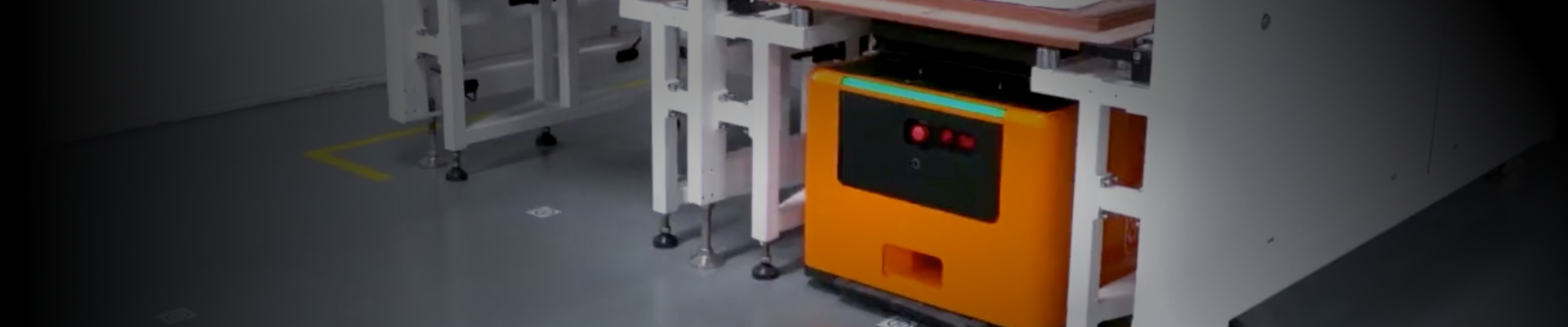
An AMR with an onboard roller/belt conveyor that docks seamlessly to fixed conveyor endpoints — transferring totes, cartons, and parcels between conveyor lines without any physical connection between them.
A Conveyor Mobile Robot (CMR) carries a miniature belt or roller conveyor on its back. When it docks to a fixed conveyor infeed or outfeed, the onboard conveyor aligns flush with the fixed line and transfers totes or cartons across — just like a fixed transfer station, but on wheels.
This solves a fundamental problem with fixed conveyor systems: changing the routing between two points requires physical conveyor modifications. With a CMR fleet, you change routing in software — the robots simply travel new paths and dock to different conveyor ports. A new "lane" is live in minutes.
CMRs are especially powerful in sortation: instead of a fixed crossbelt sorter, a fleet of CMRs performs the same sorting function dynamically — with any-to-any routing, variable throughput, and zero single-point-of-failure risk from a sorter breakdown.
One CMR can serve any combination of conveyor ports on its map. Add a new port — the robot serves it in the same shift with no hardware change.
Laser docking guide achieves ±5 มม alignment at conveyor ports — tote transfer is smooth and gap-free without mechanical guides on the fixed conveyor side.
Extended deck variant carries up to 3 totes per trip, improving throughput on long travel distances where single-tote transfers would be inefficient.
A fixed sorter breakdown stops all sortation. With CMRs, any individual robot failure is absorbed by the fleet — FMS re-assigns its tasks to peers in under 30 seconds.
Add robots to increase throughput instantly — no mechanical changes. Scale back during off-peak by parking robots at chargers and re-routing tasks to fewer units.
Onboard barcode scanner reads every tote as it loads. WMS receives real-time location — exact tote position is always known regardless of which robot is carrying it.
| Drive Type | Differential, 4-wheel |
|---|---|
| Max Travel Speed | 2.0 m/s |
| Tote Payload per Trip | 50 kg (single); 80 kg (multi-tote deck) |
| Tote Size Range | 300×200 mm to 600×400 mm |
| Onboard Conveyor Type | Belt or roller (select) |
| Conveyor Belt Speed | 0.3 m/s (transfer) |
| Docking Accuracy | ±5 มม lateral, ±2 mm height |
| Barcode Scanner | 1D/2D, top-facing, auto-read |
| Robot Dimensions | 900 × 700 × 500 mm (std deck) |
| Navigation | SLAM LiDAR |
| Battery | 48 V / 60 Ah LiFePO₄ |
| Runtime | ≥ 12 h |
| ความปลอดภัย | ISO 3691-4, PL-d, CE |
| Conveyor Port Interface | Passive dock plate (no power needed) |
|---|---|
| Port Installation | Bolt-on end-cap; retrofits to existing conveyors |
| Min Aisle Width | 1,400 mm |
| Throughput (fleet) | Up to 600 totes/h (10 CMRs, 20 m routes) |
| Max Ports per Map | Unlimited (soft limit) |
| การสื่อสาร | Wi-Fi 802.11ac 5 GHz |
| FMS API | REST, MQTT |
| WMS Integration | Event-driven tote-level API |
| Charger | Auto-dock pad, opportunity charging |

Replace fixed crossbelt sortation with a CMR fleet — any-to-any chute assignment, instant lane reconfiguration for peak promotions.
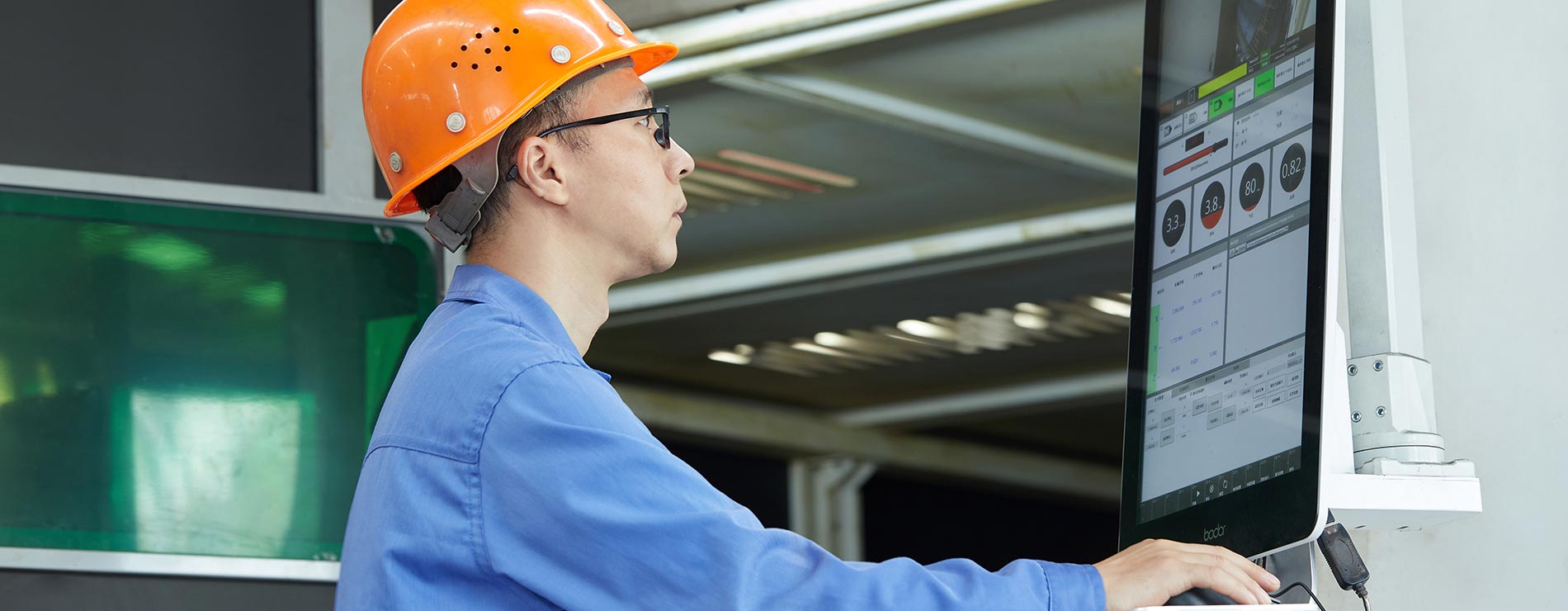
Tote-level lot tracking between storage, picking, and packing conveyor lines — compliant transfer with barcode confirmation at every handoff.
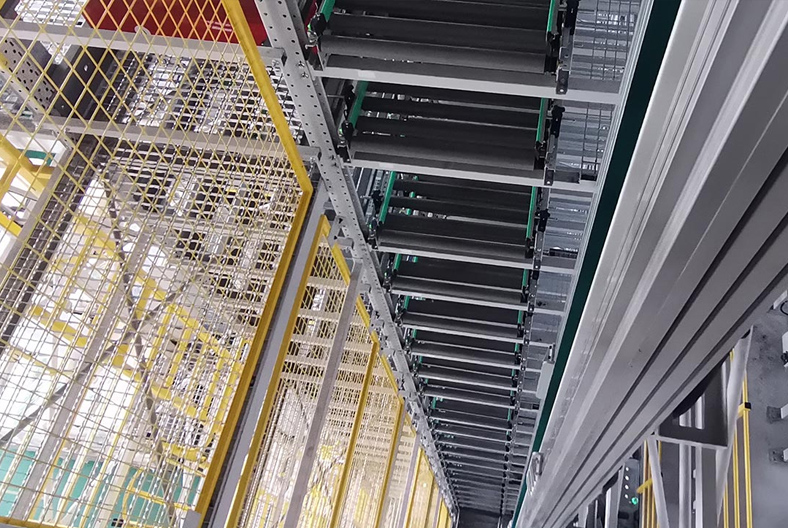
Connect LMR goods-to-person picking ports to packing stations via CMR fleet — variable-throughput routing without a permanent conveyor backbone.
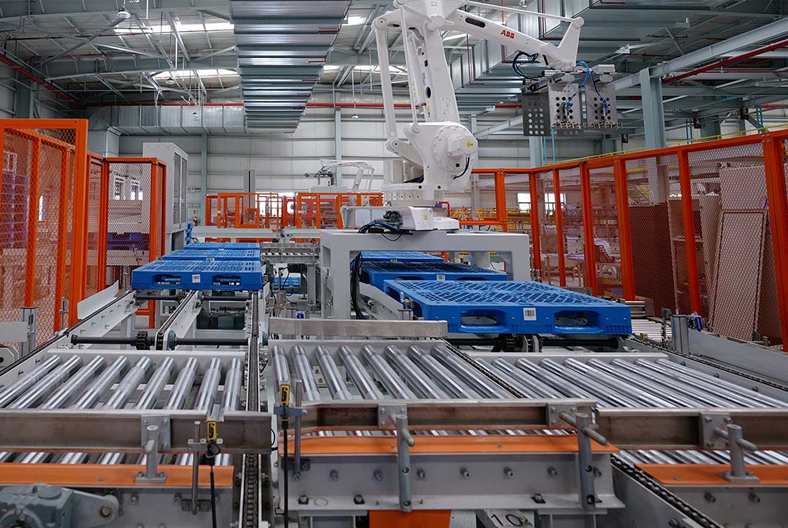
Flexible tote routing between goods-in, ambient and chilled pick zones, and despatch conveyors — one CMR fleet handles all product temperature categories.
High-speed carton sortation and transfer at 1,000+ units/h — the heavy-throughput complement to CMR tote routing.
Goods-to-person pod robot — pair with CMR to move picked totes from picking ports to packing stations.
Cart transport AMR for heavier unit-load moves alongside the CMR tote fleet on the same floor map.
Get a throughput simulation using your actual port map and order profile.
Request Throughput Simulation